Reward Program Influences on Game Selection Patterns in Regulated Mobile Gambling Platforms
Willa Schmid · Aug 8, 2026

Reward Program Influences on Game Selection Patterns in Regulated Mobile Gambling Platforms
Regulated mobile gambling applications integrate reward programs directly into game interfaces, and these systems shape which titles players select during sessions. Operators design point accumulation mechanics that favor certain game categories, while compliance rules from oversight bodies maintain transparency in how incentives distribute across options like slots, table games, and live dealer formats.
Data from industry tracking shows that players often gravitate toward high-frequency spin games when loyalty tiers unlock faster through volume-based rewards, whereas bonus structures tied to specific titles steer attention toward featured releases. Regulatory standards require clear disclosure of contribution rates, meaning each game type feeds into reward progress at defined percentages that operators must publish within the application itself.
Mechanics Linking Rewards to Game Preferences
Points systems calculate progress based on wager amounts adjusted by game category multipliers, and this calculation method creates measurable differences in how quickly users advance through loyalty levels. Slots frequently carry higher contribution weights because of their rapid play cycles, while table games such as blackjack or roulette contribute at lower rates that extend the time needed to reach tier thresholds. Researchers tracking mobile session data have documented shifts where users switch from low-volatility options to higher-variance slots once reward multipliers activate for those categories.
Seasonal promotions in regulated environments further tie specific games to accelerated point earnings, and operators update these offers through in-app notifications that highlight eligible titles. August 2026 saw several platforms adjust multiplier tables to balance participation across game libraries after compliance reviews identified uneven distribution patterns in reward redemptions.
Regulatory Oversight of Incentive Structures
Authorities in multiple jurisdictions mandate that reward algorithms undergo independent audits before deployment, ensuring no hidden weighting disadvantages certain player groups. The Malta Gaming Authority publishes guidelines requiring operators to separate promotional mechanics from core game random number generators, which prevents reward programs from altering payout probabilities. Similar frameworks appear in North American state licensing agreements, where mobile applications must log every reward transaction for periodic review by testing laboratories.
These rules create a documented environment where game selection data remains available for analysis, allowing regulators to observe whether loyalty incentives concentrate play within narrow subsets of the catalog. Industry organizations such as the American Gaming Association compile aggregated statistics showing regional variations in how reward tiers correlate with popular game types across licensed platforms.
Player Behavior Patterns in Mobile Environments
Session length records indicate that users who receive personalized game recommendations based on their current loyalty status tend to explore a wider range of titles than those following static menus. Push notifications that flag upcoming reward milestones for particular games produce measurable increases in selection rates for those featured options, according to platform analytics shared in trade reports. Yet the same data reveals that once players reach higher tiers, many revert to previously preferred categories regardless of additional incentives.
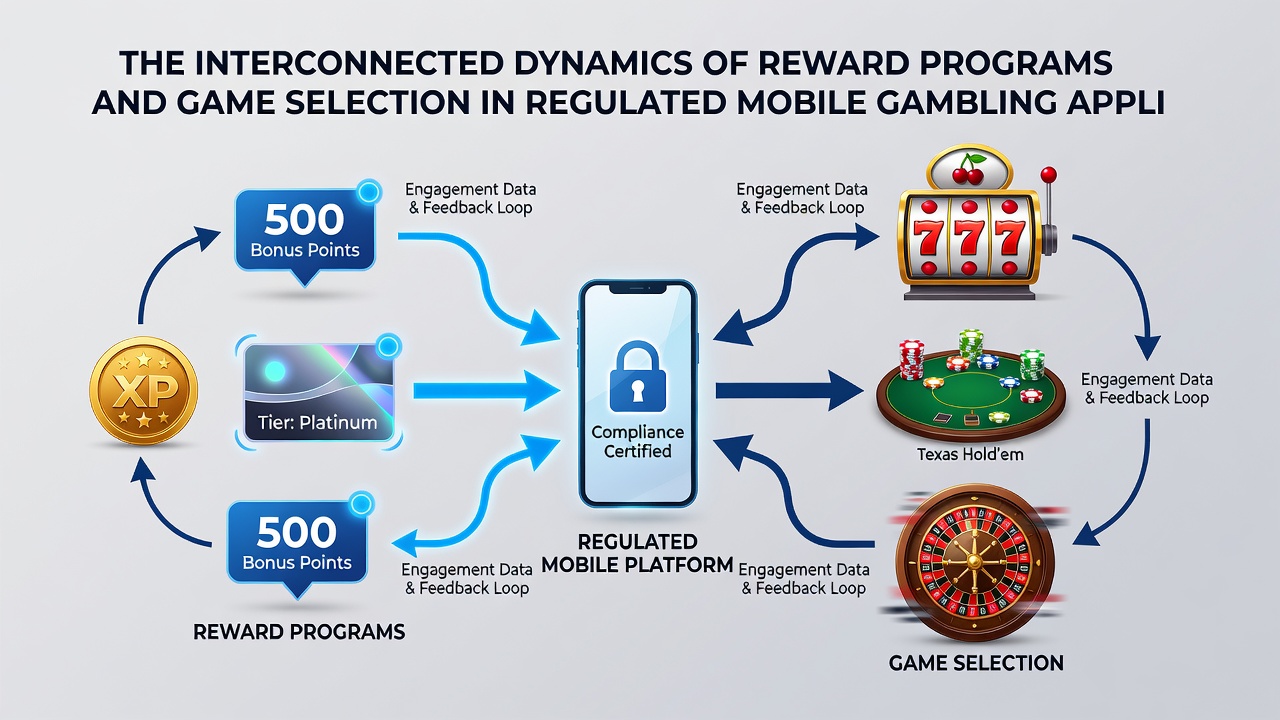
Academic examinations of gambling datasets, including studies referenced through the International Gaming Institute at the University of Nevada, demonstrate that reward program transparency correlates with more stable game selection distributions over extended periods. Mobile interfaces that display real-time contribution percentages alongside game icons help users make informed choices without external guidance.
Technological Integration and Data Tracking
Modern applications embed reward tracking within the same backend systems that manage game libraries, allowing instant updates when new titles receive promotional multipliers. Developers implement segmentation algorithms that group players by historical selection patterns, then route reward offers toward underrepresented categories to encourage broader engagement. August 2026 updates in several regulated markets introduced API connections between loyalty modules and responsible gaming tools, enabling automatic adjustments when play velocity exceeds defined thresholds.
These integrations rely on encrypted data pipelines that preserve user anonymity while delivering the granular metrics operators need for compliance reporting. Observers note that platforms maintaining separate reward ledgers for different game verticals experience fewer regulatory queries regarding incentive fairness.
Conclusion
The relationship between reward programs and game selection in regulated mobile gambling continues to evolve through iterative adjustments driven by compliance requirements and usage statistics. Operators refine contribution rates and promotional targeting while oversight bodies enforce documentation standards that keep these systems accountable. As mobile platforms expand their libraries, the documented patterns of how incentives steer choices provide a measurable framework for understanding player navigation within controlled environments.